

When the compressor becomes faulty, your fridge cannot operate correctly, and you run the risk of having to throw food away.
So, if your refrigerator compressor has broken down, it'll need to be replaced. However, before you replace the compressor, you should weigh the expense of replacing it with investing in a new refrigerator. Purchasing a new refrigerator might be a better choice.
Replacing a compressor is an extremely difficult repair to make and involves welding. You should only attempt this repair if you are experienced and/or a qualified technician. It is also an extremely dangerous repair to handle, as it involves working with highly flammable gasses.
Here`s a step-by-step guide for how exactly to replace the compressor.
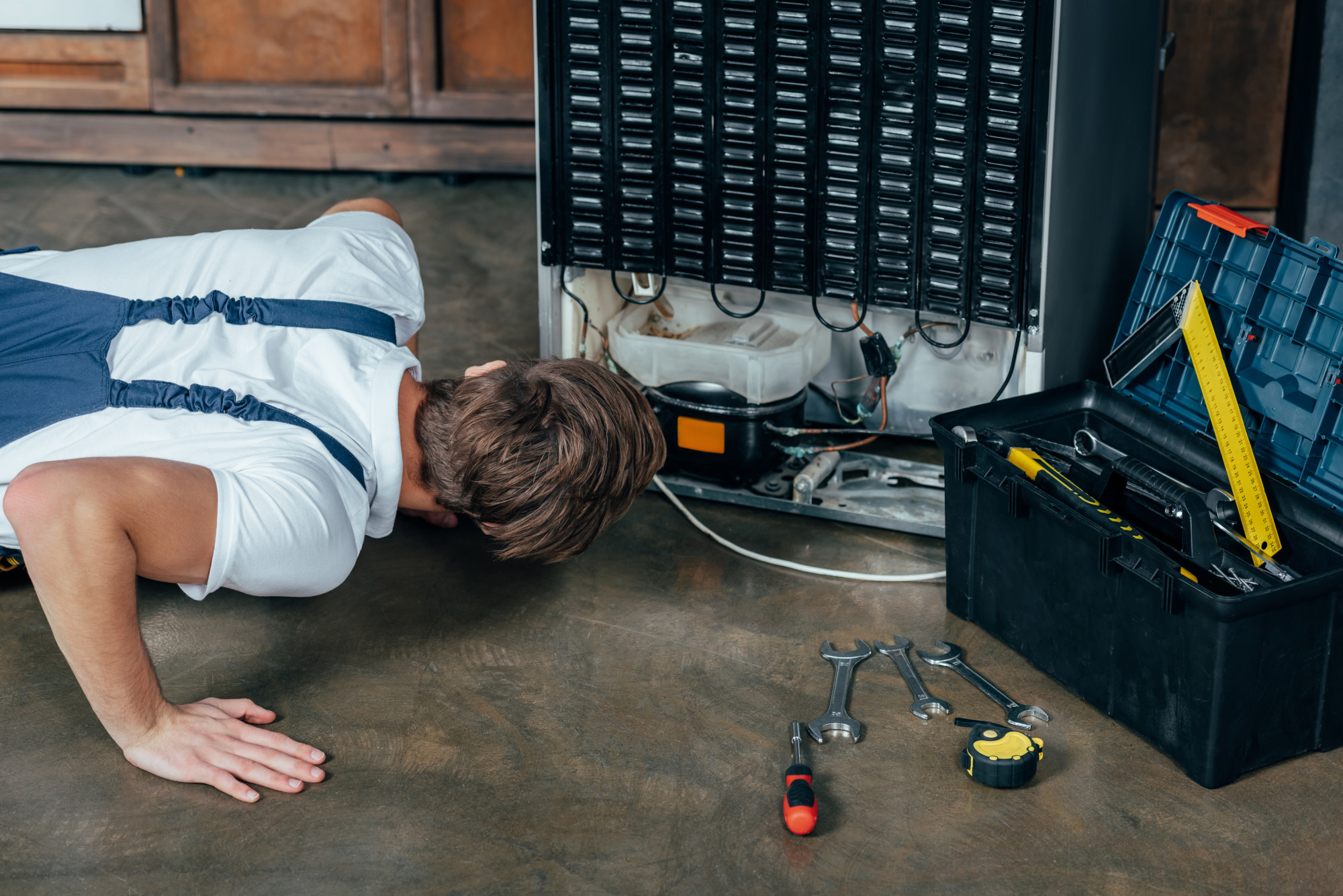
Step One. Remove the Old Compressor
The first step would be to remove the old compressor. To do that:
Turn the energy off to the refrigerator and pull the plug out.
Remove all the contents of your fridge. Since replacing a compressor may take a long time, it might be best to place your meal into coolers.
Pull the fridge out from the wall in order to access the trunk of it.
Take away the back panel of the fridge. To eliminate the panel, you merely need to unthread the screws that hold it set up, also it should come off. Once removed, stick it out of the way.
Locate the compressor. It is behind the fridge on underneath of it.
Disconnect the energy cable, and take away the cover that protects the electrical components.
Remove the relay, the capacitor, and the overload protector.
Release the refrigerant by attaching a perforating valve onto the procedure tube and then releasing it. Ensure you have adequate ventilation.
Once released, it is advisable to connect a nitrogen cylinder onto the manifold and inject the gas at a pressure of 50 PSI.
Remove the manifold valve.
Sand the compressor tubes in the areas which have been soldered so that they are abrasive.
Slice the discharge and suction tubes (leave about 20-30 mm from the finish of the process tube).
Remove the compressor.
Remove the filter. You should employ a soldering torch (use a neutral flame).
If the compressor motor burned out, you will need to clean the tubes. This is done by welding on a tube connector to the suction line and charging a cylinder with about 500 ml of solvent. You then attach the cylinder to the suction line and attach the finish of the cylinder to the solvent cylinder. Put the tip of the capillary into a container to receive the used solvent. It is possible to inject the solvent through the system. After that, you will need to supply the system a nitrogen charge to drive out any residual solvent.
Step Two. Install the New Compressor
Now that you have removed the old compressor, the next step is to install the brand new one. To achieve that:
Attach the brand new filter (be sure you have the right one). You first need to solder a Schrader valve onto the excess connection (be sure you take the cap off before welding). Next, connect and weld the filter onto the condenser outlet. You can then attach the filter to the capillary tube and weld it on.
Place the new compressor in to the correct position.
Connect all of the tubes around it, and weld them on.
You should then execute a leak test by injecting nitrogen into them and using a sniffer tool. If you don`t have a sniffer tool, you can place soapy water onto them and appearance out for just about any bubbles that appear, as this indicates you will find a leak. Once tested, release the nitrogen.
Use a vacuum pump to eliminate air from the compressor.
Install the capacitor to the relay, accompanied by the overload protector, and then attach the relay to the compressor`s terminal.
Connect the cooling system wires to the relay and the overload protector terminals.
You can now put the electrical components cover back on.
Fill the compressor with refrigerant (make sure you have the correct volume).
Double-check that all of the wires and tubes are correctly positioned, and if so, your brand-new compressor should now be successfully installed.
THIRD STEP. Test That It Works
The final step would be to test your new compressor works. You can do that by simply turning your refrigerator back on and testing to see if it's working. If not, refrigerators repair will have to contact a technician to have a look at it.